
"Where do I start?" Every new trader asks this. Most answers are either too vague or too complicated. What follows is a concrete 6-month roadmap.
Trading vs. Investing
Before anything else, know the difference:
- Investing: buying assets to hold long-term (months to years) based on fundamental value
- Trading: buying and selling based on price movement over shorter periods (days to weeks)
Both are legitimate approaches. Trading requires more technical skill and stricter risk discipline. This article focuses on trading.
The Three Pillars Every Trader Needs
1. Technical Analysis
Learning to read charts is the starting point. Begin with these, in order:
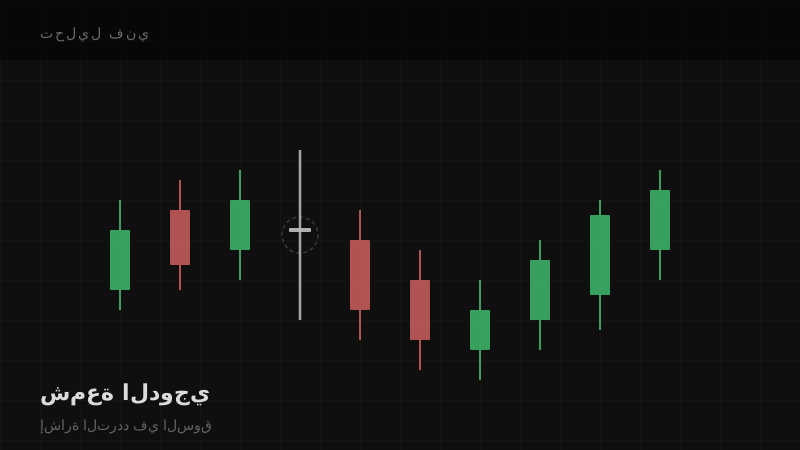
- Japanese candlestick patterns: 30 basic ones are enough to start
- Support and resistance levels: where price has historically reversed
- Trend identification: is price making higher highs and higher lows, or lower highs and lower lows?
- Three core indicators: RSI, MACD, and moving averages
Do not try to learn everything at once. Spend the first two months on candlesticks and support/resistance only. Add indicators once you understand price structure.
2. Risk Management
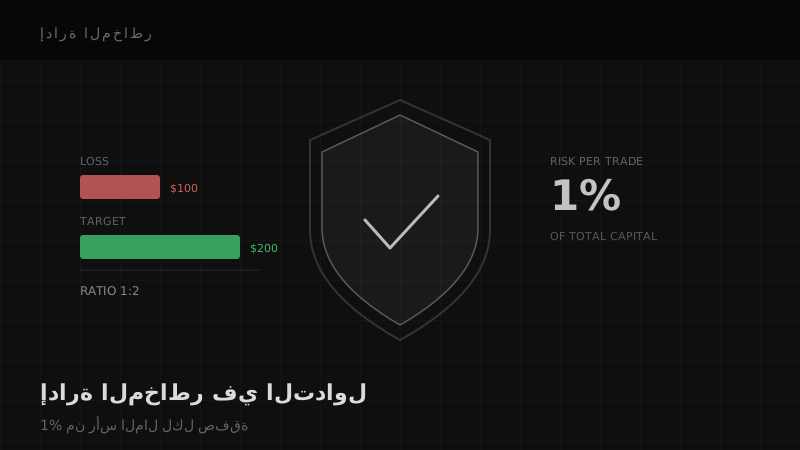
This matters more than analysis. The trader who manages risk survives long enough to improve. The one who does not, burns the account before they can learn.
- Never risk more than 1-2% of your capital on a single trade
- Set a stop loss before you enter, not after
- Never move the stop loss further away when losing
- Size positions based on where the stop is, not based on gut feel
3. Trading Psychology
90% of beginner mistakes are emotional, not technical.
- Fear of loss causes premature exits, cutting winners short
- Greed causes holding too long, turning winners into losers
- Revenge trading after a loss: entering the next trade to "get it back" is how accounts get wiped
Understand your relationship with loss before you put real money at risk. Paper trading first is not optional; it is the test.
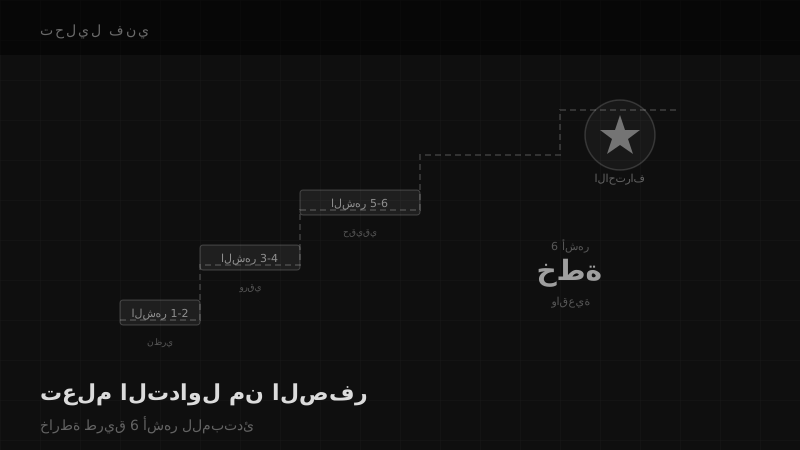
The 6-Month Roadmap
Months 1-2: Theory
Learn candlestick patterns and support/resistance. Read about risk management and position sizing. Do not touch real money. The goal is understanding, not income.
Months 3-4: Paper Trading
Use a simulator to make trades without real stakes. Track every single trade: why did you enter? What was the stop loss? What happened and why? Paper trading reveals your decision-making patterns before they cost you money.
Months 5-6: Real Money, Small Size
Start with the smallest amount you are genuinely comfortable losing entirely. The goal is not profit. The goal is applying the discipline you built in the simulator under real emotional conditions. Profit comes later, after the habits are set.
Mistakes to Avoid from Day One
- Margin and leverage: too risky until you have at least a year of consistent results
- Following signal groups: you will not learn anything and will not know when the signals are wrong
- Expecting profits in the first months: the first 6 months are education, not income
- Trading multiple markets at once: pick one market, learn it properly, then expand
- Skipping the journal: traders who do not record their trades do not improve
Learning to trade takes 6 to 12 months of consistent, structured work. People who follow a real learning process get somewhere. People who chase shortcuts usually lose money and quit. Start right.