
The question comes up constantly among Muslim investors: is stock investing halal? Short answer: yes, with conditions. The conditions are not complicated once you know what to check.
The Basic Principle
Buying shares means owning a portion of a company and sharing in its profits. Most contemporary Islamic scholars permit this. The issues come from what the company does and how it finances itself.
What Makes a Stock Non-Compliant
Certain sectors are excluded regardless of financial ratios. These include:
- Alcohol and intoxicants
- Tobacco products
- Weapons manufacturing
- Pork and pork derivatives
- Conventional banking and insurance (interest-based business models)
- Gambling and games of chance
- Adult content
If the company's primary business falls into any of these categories, the stock does not qualify, regardless of how financially sound it appears.
The Debt Ratio Test
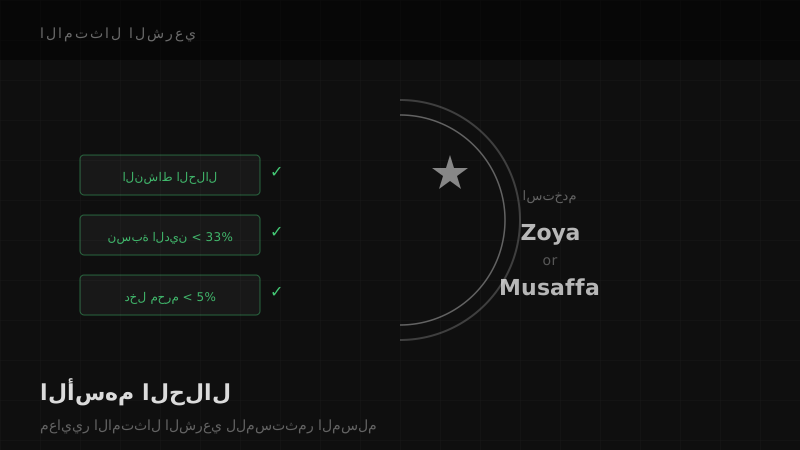
Even companies in halal sectors can fail screening if they rely heavily on interest-bearing debt. The most widely used standard: interest-bearing debt should be below 33% of total assets. Some screening services use market capitalisation as the denominator instead. Either way, excessive reliance on riba-based financing is a disqualifier.
The Revenue Test
Some companies with clean core businesses earn a small percentage of revenue from prohibited activities. A hotel chain that serves alcohol is one example. If non-compliant revenue exceeds 5% of total revenue, the common guidance is either to avoid the stock or to donate that proportion of your dividends to charity as purification (tazkiyah).
Tools That Do the Screening for You
Manual screening is time-consuming. These tools do it at scale:
- Zoya (app): widely used, screens millions of stocks instantly with a clear pass/fail and a breakdown of why
- Musaffa: more detailed, shows the specific ratios and why a stock passes or fails each criterion
- ISFI by Ideal Ratings: institutional-grade screening for larger portfolios or fund managers
What About Options, Margin, and Derivatives?
Most contemporary scholars do not permit these instruments. Options and derivatives involve gharar, which refers to excessive uncertainty. Margin trading involves riba. Kanz does not cover these instruments and focuses on equities, metals, and certain digital assets only.
Sharia compliance is a filter, not a complete strategy. A halal stock still needs sound technical analysis and proper risk management. Screen it first. Then analyse it.